

APIC: Masks are a Critical Public Health Tool in Preventing the Spread of Respiratory Infections
Arlington, Va., February 17, 2023 – The Association for Professionals in Infection Control and Epidemiology (APIC) is concerned that a recent report questioning the value of masks to prevent COVID-19 could weaken the ability to mitigate future outbreaks of respiratory infectious diseases.
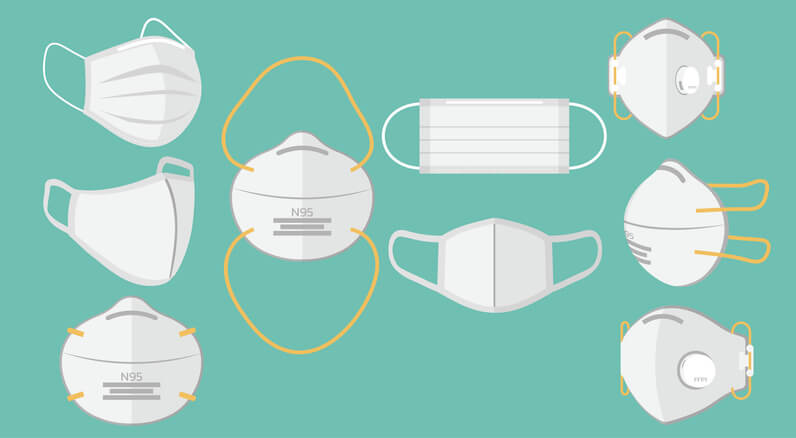
“The benefits of masking have been shown in healthcare and can be critical in preventing the spread of infection – but this depends on proper and consistent use,” said 2023 APIC President Patricia Jackson, RN, BSN, CIC, FAPIC. “The use of respiratory protection – including well-fitting N95s and surgical masks — is a critical public health tool in our arsenal to protect the public and healthcare workers when severe respiratory infections are spreading. APIC will continue to advocate for the value of masks and respirators in reducing transmission of respiratory infections.”
COVID-19 and other respiratory infectious diseases are primarily spread through respiratory droplets in the air that are released when a person talks, coughs, or sneezes. When worn consistently and effectively, face masks and respirators are helpful in preventing the spread of COVID-19 and other respiratory diseases. They act as a barrier to prevent inhalation of infectious respiratory droplets and can keep infectious particles from spreading into the air from infected people.
The Cochrane analysis pooled results from studies in communities around the world that largely took place before 2016, with only two taking place during the COVID-19 pandemic. Their analysis concluded that in community settings (outside of healthcare) medical masks appeared to offer no additional protection compared with wearing no mask at all. In healthcare settings, they concluded that N95 respirators were no better than surgical masks in preventing transmission of respiratory diseases.
However, the authors recognized that adherence with mask wearing was a problem, and that although studies took place during respiratory viral seasons, they may have not been able to detect differences if local virus circulation was low. They did not monitor all aspects of mask and respirator use, such as observing whether participants were consistently wearing masks, whether they used the same mask for long periods of time without washing it, or whether people may have contaminated themselves with hands that touched the dirty mask. It should also be noted that some of these studies were conducted within households as opposed to public or business locations.
“Despite Cochrane’s reputation for producing credible health reviews, the many factors and details that go into successfully using masks and respirators as a public health intervention weren’t all reflected in this review,” said Jackson.
Jackson said that this underscores the need to better understand how to make masking successful in community settings. “We know what we tell people to do, but how do we make it practical to do it well when we really need to?” She stated that APIC will continue to promote masking as an evidence-based mitigation strategy, especially as we face the threat of emerging infectious diseases. “We are redoubling our efforts to assure that the public has the education to use masks and respirators to the best advantage. We cannot afford to discount the strong evidence that supports masking as a proven public health intervention, or discourage common-sense measures that can prevent infection and save lives.”
Founded in 1972, the Association for Professionals in Infection Control and Epidemiology (APIC) is the leading association for infection preventionists and epidemiologists. With more than 15,000 members, APIC advances the science and practice of infection prevention and control. APIC carries out its mission through research, advocacy, and patient safety; education, credentialing, and certification; and fostering development of the infection prevention and control workforce of the future. Together with our members and partners, we are working toward a safer world through the prevention of infection. Join us and learn more at apic.org.
# # #
Media contacts: Aaron Cohen, aacohen@gmail.com, 301-633-6773; Liz Garman, egarman@apic.org, 202-365-7421